Why this matters
This cluster owns the demand-generation layer: websites, local pages, GBP optimization, and the connection between visibility and booked jobs.
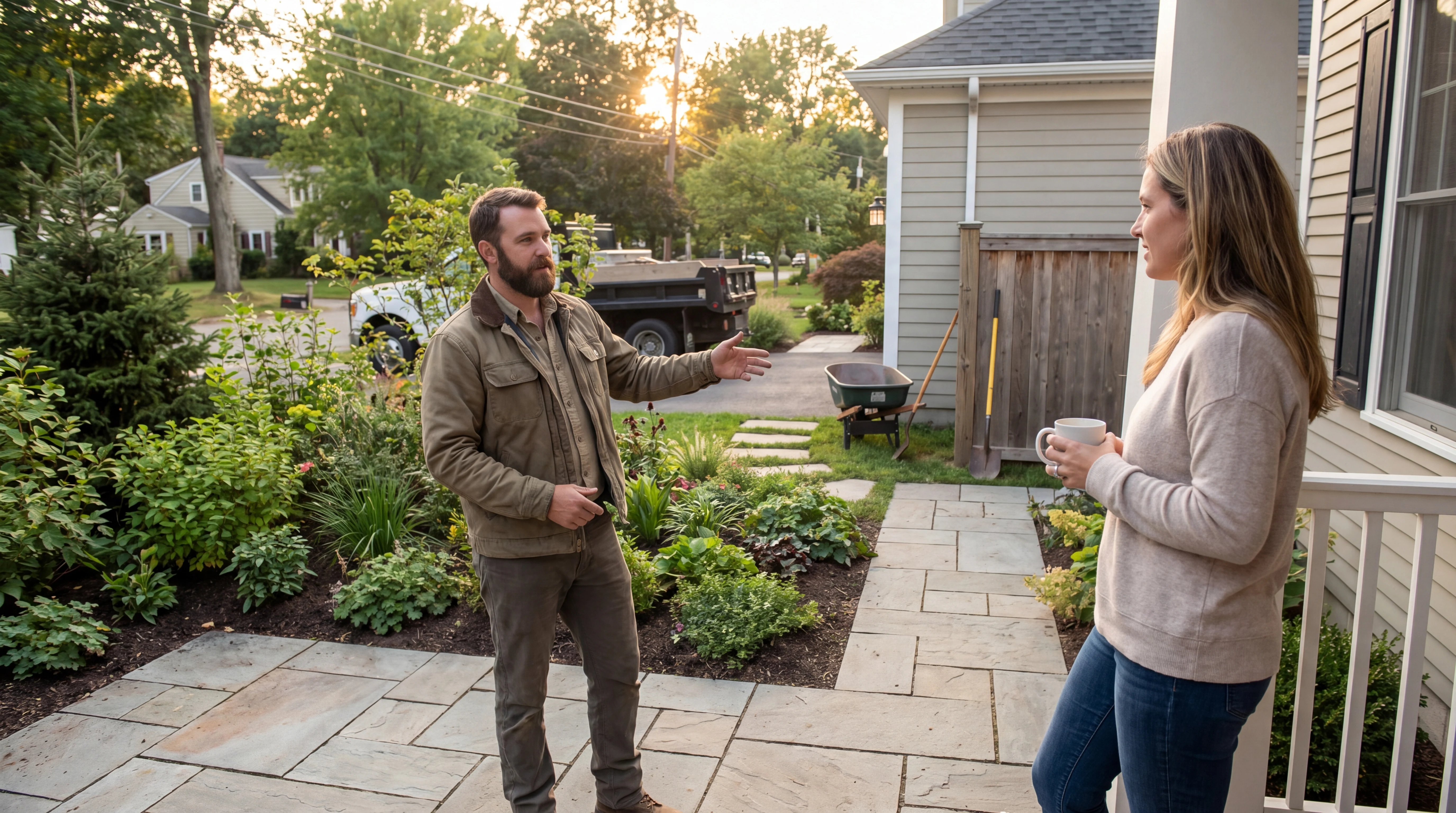
Landscaping demand does not arrive evenly. It arrives in a spring surge, a steady summer, a fall cleanup wave — and it arrives while your crews are on mowers and behind wheelbarrows, nowhere near a phone. That is why local SEO for landscaping companies fails in a specific way: the visibility works, the calls come, and the busiest weeks of the year are exactly when the fewest calls get answered.
This playbook treats local SEO and quote response as one system, because for landscaping they are.
TLDR:
- Landscaping local SEO should be measured in booked walkthroughs and recurring contracts, not map-pack position.
- Photos are the portfolio — for this trade they convert searchers harder than most profile inputs.
- Split maintenance intent from project intent; they qualify and book differently.
- The spring surge is won by whoever answers. Response speed is a seasonal weapon.
- Every completed project should produce a review while the yard still looks freshly done.
Short answer: visibility fills the funnel, response books the season
Google’s guidance on local ranking — relevance, distance, prominence, complete information, photos, review responses — is the discovery layer, and it works the same for landscaping as any local trade. The difference is what happens next. Landscaping buyers usually want a conversation: a quote, a walkthrough, a price for the season. Profile performance reporting will show you the calls and messages; the business question is how many became scheduled visits.
The working sequence:
- Build the profile around the services and seasons you actually sell.
- Let project photos do the persuading.
- Answer every quote call, especially during the surge weeks.
- Book walkthroughs and estimates on the first contact.
- Ask for the review when the job is finished and the yard is at its best.
Build the profile around seasons, not just services
A landscaping profile earns more when it mirrors how homeowners actually search through the year:
- Spring: cleanups, mulching, lawn treatment programs, weekly mowing.
- Summer: irrigation, planting, hardscaping, outdoor living projects.
- Fall: leaf removal, aeration and overseeding, winterization.
List those as explicit services with the words homeowners use. Keep the service area honest — routes you actually run — because distance is a core ranking input and a lead two towns over that you will never serve is just noise in the inbox.
And load the photos. Google recommends photos for stronger local presence; for landscaping they are the product page. Before-and-after pairs, finished patios, clean edges. A profile with two hundred real project photos out-converts a thin one at the same ranking.
Reviews: ask while the yard is perfect
Most consumers read reviews before choosing a local service business, and landscaping reviews have a useful property: the best moment to ask is unmistakable. The crew just rolled up the tarps, the beds are cut, the yard photographs well — that is the day the review request should go out, every time, automatically.
Two habits compound this:
- A same-day automated ask after every completed project and every seasonal cleanup — not just the big installs.
- Owner responses to reviews that mention the crew by name and the work by type. Future searchers read those responses as attentiveness.
Split maintenance intent from project intent
One front desk, two scripts.
- Maintenance inquiries — weekly mowing, seasonal programs — want a price and a start date. Qualify the property size and frequency, quote from your rules where you can, and book the start.
- Project inquiries — design, hardscape, irrigation — want a walkthrough. Capture the property details, the scope words the homeowner used, and their timeline, then book the visit into a real slot.
When intake rules encode that split, the office stops playing telephone between the crew, the calendar, and the homeowner — and the booking workflow can run without anyone standing still to run it.
Win the surge weeks on response speed
Spring is a market share event. Every landscaping company in the county ranks somewhere, every homeowner calls two or three, and the calls land in the same few weeks. The company that answers first books the walkthrough; the one that calls back Thursday gets the polite “we found someone.”
Practically:
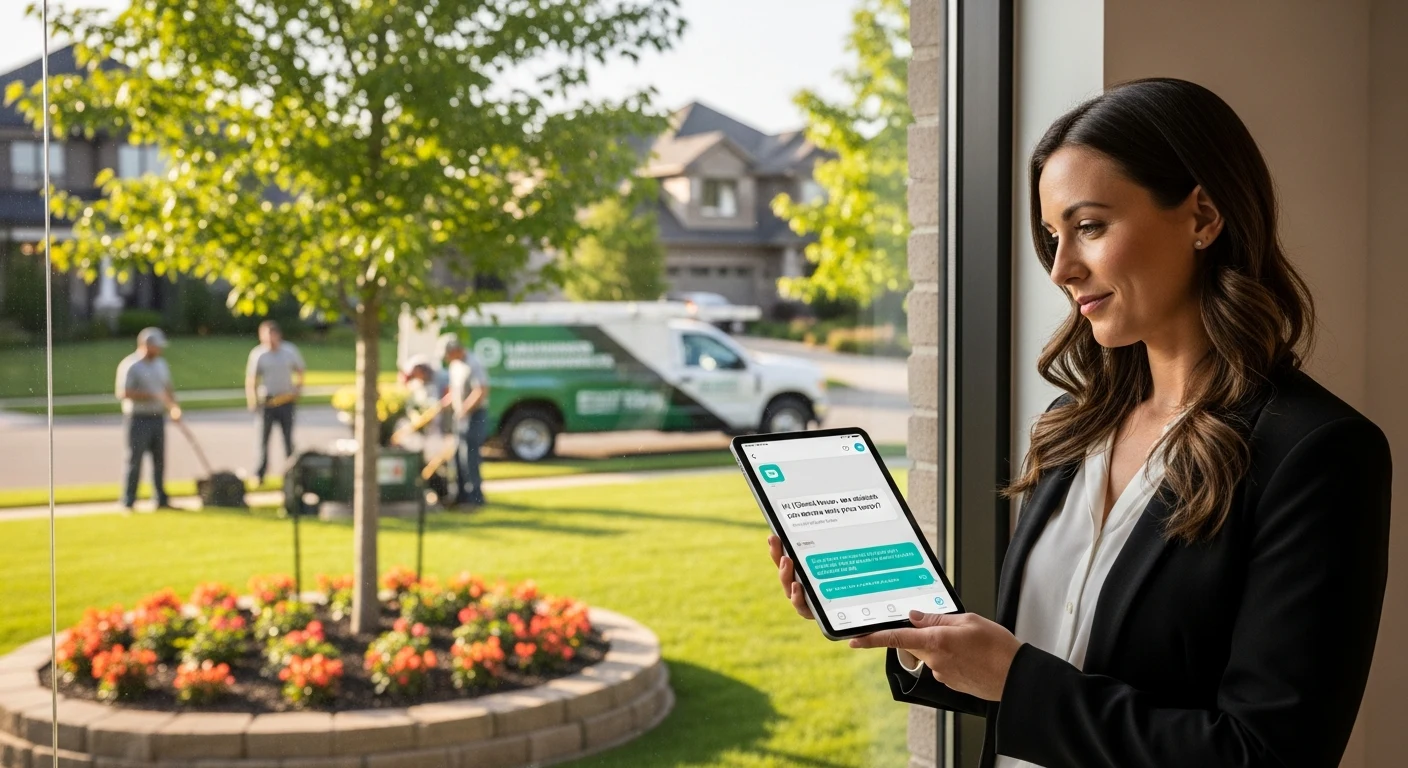
- Every call answered during surge weeks, even — especially — while crews are out. This is where an AI front desk earns its month, holding the line while the humans stay productive.
- Every missed call texted back in seconds, with the thread qualifying the lead and booking the visit.
- Quote follow-ups sequenced automatically, because a spring homeowner who went quiet is usually still buying — from whoever follows up.
Measure booked work, not impressions
The landscaping scorecard:
- Profile calls and messages per week, tracked against the season.
- Answered-call rate during surge weeks specifically.
- Walkthroughs booked per week, and how many quotes convert to projects.
- Recurring contracts added per month — the compounding asset.
- Review count and photo count, month over month.
If visibility grows but booked walkthroughs do not, the leak is in response, not rankings.
A 30-day playbook for landscaping companies
- Week 1: Complete the profile — seasonal services, true route-based service area, hours, and fifty real project photos to start.
- Week 2: Stand up the response layer: every call answered, missed calls texted back, and separate booking rules for maintenance versus projects.
- Week 3: Turn on automated review requests after completed work; respond to the existing review backlog.
- Week 4: Read the numbers against the season and fix the weakest step before the next surge, not during it.
Where MyBusinessFlow fits
MyBusinessFlow runs the response half for landscaping companies: the spring rush answered 24/7, missed quote calls texted back before the homeowner dials the next name, walkthroughs and weekly service booked into real availability, and the review ask sent when the crew rolls out. Local SEO makes the phone ring; the front desk makes the season out of it.
Final recommendation
Time the work to the calendar. Build the profile and photo library in the off-season, stand up the response layer before the surge, and measure the spring in booked walkthroughs per week. For landscaping more than most trades, local SEO is seasonal leverage — and response speed is what cashes it in.
Frequently Asked Questions
Sources
Research and verification links
- 1https://support.google.com/business/answer/7091/improve-your-local-ranking-on-google?hl=en
- 2https://support.google.com/business/answer/7689763?hl=en
- 3https://www.brightlocal.com/research/local-consumer-review-survey/
- 4https://www.mybusinessflow.com/industries/landscaping/
- 5https://www.mybusinessflow.com/solutions/voice-ai/
- 6https://www.mybusinessflow.com/solutions/missed-call-recovery/