Why this matters
This cluster owns the demand-generation layer: websites, local pages, GBP optimization, and the connection between visibility and booked jobs.
Short Answer
For many plumbing companies, the highest-return version of local SEO is not “more rankings” by itself. It is a tighter workflow that does three things well:
- Wins visibility in Google Business Profile and local search
- Turns that visibility into trust through reviews, photos, service pages, and fast response handling
- Hands every call, form, and message into an intake process that actually gets the job booked
That priority is commercially sensible because plumbing demand is local, urgent, and often decided fast. If your company shows up in the map pack but misses calls, responds slowly, or gives weak first-touch intake, your SEO can look active while booked jobs stay flat.
So the better question is not just, “How do I do local SEO for a plumbing company?” It is:
How do I connect local visibility to booked jobs without losing demand in intake?
In practice, that usually means prioritizing Google Business Profile visibility, review operations, and conversion handoff before expanding content volume or buying a broader marketing program. If you want the category view of that handoff, see GBP to Booked Jobs: visibility matters when it turns into answered calls, qualified conversations, and scheduled work.
Why local SEO often fails to produce booked plumbing jobs
A lot of plumbing owners already have the basics: a website, a Google Business Profile, some reviews, and maybe agency support. Yet booked jobs still feel inconsistent. Usually, the problem is not local SEO in isolation. It is that the business treats SEO as a marketing layer instead of a demand-capture system.
The common failure pattern
This is what the breakdown often looks like:
- The company appears in local search for some service terms
- The listing gets views and calls
- Reviews are thin, old, or inconsistent
- Photos and service signals are weak
- The website exists but does not help the buyer take the next step
- Calls are missed after hours or during field rush
- Form leads sit too long
- Intake quality depends on who happens to answer
The result is not simply “bad SEO.” It is broken conversion from local demand into booked work.
Why this matters more in plumbing
Plumbing customers often make decisions in minutes, not days. A leaking water heater, clogged main line, or active leak does not create a long nurture cycle. Searchers want a provider they trust enough to contact right now.
That is why local SEO for plumbing has to be judged against booked-job outcomes, not just traffic or rankings.
The plumbing buying context
Local SEO works best when it reflects how plumbing customers actually choose.
Urgency changes what buyers notice
In plumbing, three trust signals matter especially fast:
- proximity and service-area fit
- review quality and recency
- confidence that someone will respond now
A company can rank well and still lose the job if the profile looks stale or the phone is not answered.
Service-line clarity beats broad branding
A generic homepage rarely does enough. Buyers search for specific problems:
- water heater repair
- drain cleaning
- sewer line service
- leak detection
- emergency plumber
- toilet repair
- repiping
Visibility improves when your online presence makes those services explicit. Booking quality improves when the customer immediately sees that you handle their issue.
Trust is built before the call starts
Customers use your Google Business Profile, reviews, photos, and local pages to decide whether calling is worth it. So local SEO is partly a reputation and operations problem, not just a content problem.
Available evidence here is limited and mostly comes from vendor-owned pages, so named companies are best treated as examples rather than a complete ranking. Public pages do not clearly establish pricing, implementation effort, or comparative booked-job outcomes.
For a broader view of how this fits the trade, the Plumbing overview connects marketing questions back to shop and office workflow.
The workflow to prioritize first
If the goal is booked jobs, this sequence is usually the most practical:
- Fix Google Business Profile completeness and local trust signals
- Build a repeatable review request and response process
- Improve website and service-page conversion paths
- Tighten intake so calls, forms, and messages get answered and scheduled
- Then expand local content and campaign complexity
Why the order matters
A plumbing company with average rankings but strong response handling can outperform a better-ranked competitor with weak intake.
A polished website without review momentum and Google Business Profile activity can underperform in the map pack.
A strong profile without after-hours coverage can still leak high-intent demand.
The chain you are trying to build is simple:
search visibility → trust → contact → fast response → qualified conversation → booked job
Break one link, and SEO ROI drops.
Google Business Profile visibility is usually the first lever
If local SEO is supposed to produce booked plumbing jobs, Google Business Profile is often the first place to look. That is where a large share of high-intent local discovery happens.
What to strengthen in your profile
Your profile should help a searcher confirm four things quickly:
- you serve their area
- you offer the service they need
- other customers trust you
- contacting you will be easy
That means tightening:
- accurate business information
- service categories and service areas
- current hours, including emergency availability if relevant
- photos of trucks, team, completed work, and branded presence
- review volume and review recency
- response activity
- clear website and call paths
What good visibility actually does
Google Business Profile is not just a rankings asset. It is the front door to intake. If the profile drives calls that go unanswered or clicks to a weak page, the profile is doing its job while the rest of the system fails.
That same handoff is the core idea behind GBP to Booked Jobs: local visibility matters when it produces real conversations and scheduled work.
Reviews and response handling affect booked jobs directly
Reviews matter for local SEO, but for plumbers they also influence whether a prospect feels safe taking the next step. In many local buying decisions, the review section is the fastest credibility check a customer performs.
Review quantity is not enough
A plumbing company with many old reviews can still lose to a competitor with fewer but fresher, more specific reviews. Buyers look for signs that your business is active now and reliable on jobs like theirs.
Reviews that mention service type, speed, professionalism, communication, cleanup, and resolution quality are usually more persuasive than vague praise.
Review recency lowers hesitation
Recent positive feedback makes a business feel operationally alive. That lowers friction. When the newest reviews are months old, mixed, or unanswered, buyers have a reason to hesitate.
That is why review generation should be tied to completed jobs, not treated as a one-time campaign.
Response handling signals how your company operates
Review responses shape trust because prospects read them as a preview of how you communicate.
A strong response pattern usually does three things:
- acknowledges the customer clearly
- reinforces professionalism without sounding canned
- handles negative feedback calmly and responsibly
For booked jobs, that matters because response behavior signals what the intake and service experience will feel like.
The handoff from search demand into intake is where revenue is won
This is the part many local SEO discussions underplay. A plumbing company can generate demand and still underperform if the handoff into intake is loose.
Calls are not the same as booked jobs
A call only matters if it is answered well and converted. That includes:
- fast pickup
- clear qualification
- helpful scheduling language
- good urgency handling
- no dead-end voicemail unless there is no other option
Missed-call leakage is especially expensive in plumbing because many leads will not wait.
Forms and messages need a response standard
Not every customer calls. Some submit forms or send messages from your site or profile-linked pages. Those leads need a defined response process.
If your business cannot clearly answer these questions, your local SEO system is incomplete:
- Who receives the lead?
- How fast do they respond?
- How are after-hours inquiries handled?
- How is lead status tracked through booking?
Where AI front desk workflows fit
This is where demand generation connects back to conversion operations. When a prospect arrives from local search, the practical question is simple:
Is someone or something reliably capturing, qualifying, and routing that demand?
For plumbing companies with inconsistent phone coverage, after-hours leakage, or uneven dispatcher performance, it can be worth evaluating an AI front desk workflow as part of the handoff. The test is not whether the technology sounds advanced. The test is whether it improves response speed, reduces missed opportunities, and supports reliable booking.
Your website matters mostly as a conversion asset
Some plumbing owners ask about local SEO. Others ask, “What is the best website builder for home service businesses?” In practice, those are often the same buying decision.
A plumbing website should not be judged mainly on design taste or editor convenience. It should be judged on whether it helps local search traffic become booked work.
What the website needs to do
At minimum, your site should help a visitor confirm:
- service coverage
- plumbing specialties
- trust signals
- contact options
- urgency handling
- clear next steps
That usually means strong service pages, local relevance, visible phone contact, and simple conversion paths.
What to verify in a platform or service
If you are comparing website providers, agencies, or platforms, ask:
- Can we build and update service-specific pages cleanly?
- Does the site support local discoverability?
- Can we keep reviews, photos, and trust signals current?
- What happens after a lead submits a form?
- Can calls, forms, and local landing pages connect to intake reporting?
- Who owns updates, and how fast can changes be made?
That is usually more useful than debating templates or cosmetic features.
For more on this demand-generation layer, the Website and Local Presence Hub covers the surrounding decisions without changing the core standard.
What “best website builder for home service businesses” really maps to
That query sounds like software research, but for plumbers it is usually an operations question in disguise.
The real buying question
The practical issue is not, “Which builder has the nicest editor?” It is:
- Will this support local pages and service pages?
- Will it help the business look credible in local search?
- Will it connect cleanly to lead capture and intake?
- Can the team keep it updated without friction?
If a platform creates a polished site but makes local updates slow, review proof hard to display, or lead routing messy, it can hurt booked-job performance.
How to connect the decision back to revenue
When plumbing companies compare website options, they should use the same standard as local SEO:
Does this system improve discoverability, trust, and handoff into scheduling?
That is the useful bridge between “website builder” research and booked-job outcomes.
How current vendor examples fit the buying decision
The current source set supports a few named examples, but not a full market ranking. These companies are better used as illustrations of different approaches buyers may evaluate.
Topline Pro
Topline Pro describes itself as a website, review, and marketing automation platform for contractors. Its public materials also indicate integration with Google Business Profile.
That may fit plumbing companies that want one system to support website presence, review collection, and local marketing tasks. What is less clear from the public evidence is:
- pricing structure
- implementation effort
- how much hands-on support is included
- how reporting connects to booked-job quality
- how the workflow performs after lead creation
Those are the buyer checks to verify in a live evaluation.
Scorpion
Scorpion describes itself as an agency-led marketing platform for home service businesses. Its public materials also point to ads and CRM-related integrations.
That may fit plumbing companies that want a more managed marketing relationship rather than a lighter platform-led setup. What remains unclear from public pages is:
- pricing and contract structure
- level of agency involvement in local SEO execution
- how much plumbing-specific intake workflow support is included
- whether booked-job attribution is practical at the shop level
- what operational work still stays with the business
Those details matter more than broad positioning.
A better way to compare providers
Do not ask only, “Who can get us more leads?” Ask:
- Which setup strengthens Google Business Profile visibility and review operations?
- Which one makes service-area and service-line updates manageable?
- Which one reduces missed calls or delayed follow-up?
- Which one helps us separate junk leads from bookable jobs?
- Which one fits the way our office actually runs?
That comparison framework is usually more useful than a brand-first shortlist.
The operational checks that actually matter
This is not a generic SEO checklist. It is the short list of actions that most directly affect whether local search becomes booked plumbing work.
1. Tighten Google Business Profile trust signals
Update business information, hours, service relevance, photos, and conversion paths so the profile reflects how your operation works now.
2. Tie review requests to completed jobs
Do not rely on occasional asks. Build a repeatable post-job process so reviews stay fresh.
3. Respond to reviews with discipline
Answer positive reviews professionally and negative reviews calmly. Prospects read both.
4. Strengthen high-intent service pages
Focus on the plumbing jobs customers actually search and book. Local clarity matters more than publishing low-value articles.
5. Remove intake leakage
Audit missed calls, after-hours handling, slow form response, and inconsistent qualification. This is where booked jobs often disappear.
6. Track booked outcomes, not just lead counts
A local SEO motion that produces more inquiries but not more scheduled work is not finished.
Metrics that matter more than rankings alone
Rankings still matter, but plumbing owners need metrics that connect to revenue.
Primary commercial metrics
Track these first:
- booked jobs from Google Business Profile and local search
- call answer rate
- missed-call rate
- form response time
- booking rate by source
- average job value by source, if available
- review volume and recency
Secondary visibility metrics
These help explain performance:
- profile views and actions
- service-page visits
- local landing page engagement
- branded versus non-branded lead mix
What to watch for
If visibility rises but booked jobs do not, inspect intake.
If calls rise but booking rate falls, inspect qualification and scheduling.
If review volume grows but conversion does not, inspect review specificity, response handling, and service-page clarity.
A practical 90-day approach for plumbing companies
A useful local SEO program does not need to start with everything at once. It needs the right order.
Days 1-30: Fix the front door
- clean up Google Business Profile
- align service information
- improve core trust signals
- audit current reviews
- identify call and form leakage
Days 31-60: Improve proof and conversion
- launch consistent review requests
- respond to recent reviews
- strengthen key service pages
- make phone and contact actions more obvious
- define intake ownership and response expectations
Days 61-90: Connect reporting to booked jobs
- compare source-level lead quality
- track booking rate from local search paths
- review after-hours performance
- refine pages and messaging around top-booking services
This sequence is often more effective than immediately expanding content volume because it fixes the parts of the funnel closest to revenue first. If the operational bottleneck is intake rather than visibility, reviewing your AI front desk options may be more useful than adding more traffic.
When to expand beyond the basics
Once Google Business Profile visibility, reviews, service pages, and intake are functioning well, broader local SEO investments make more sense. That can include deeper location coverage, richer service-page depth, and stronger supporting content.
Expand after conversion works
Expansion should follow proof of conversion, not replace it.
A plumbing company that has not solved response handling usually does not need a larger traffic machine. It needs a better booking machine.
If you are weighing those next steps in a trade-specific context, the Plumbing section and the Website and Local Presence Hub are useful reference points for evaluating fit.
Final recommendation
If you are buying local SEO for a plumbing company, prioritize the workflow that connects Google Business Profile visibility, review credibility, and fast intake conversion. That is usually the clearest path from local search to booked jobs.
Do not choose based only on rankings language, website aesthetics, or lead-volume promises. Choose based on whether the system can:
- strengthen local discoverability
- improve trust at the moment of search
- reduce missed calls and slow follow-up
- support consistent booking conversations
- show whether local demand becomes scheduled work
In the current evidence set, Topline Pro represents a contractor-focused mix of website, review, and marketing automation capabilities, while Scorpion represents an agency-led marketing approach for home services. Either may fit certain operating models, but the available public evidence does not support naming a default winner for plumbing companies.
The stronger buying move is to select the approach that best connects visibility, trust, intake, and booked-job reporting inside your actual operation. If you want to evaluate that handoff directly, start with the GBP to Booked Jobs framework and verify how each option performs once a local prospect tries to contact you.
Supporting visuals
Visual proof and context
Screenshots and images that support this article, with sources noted.
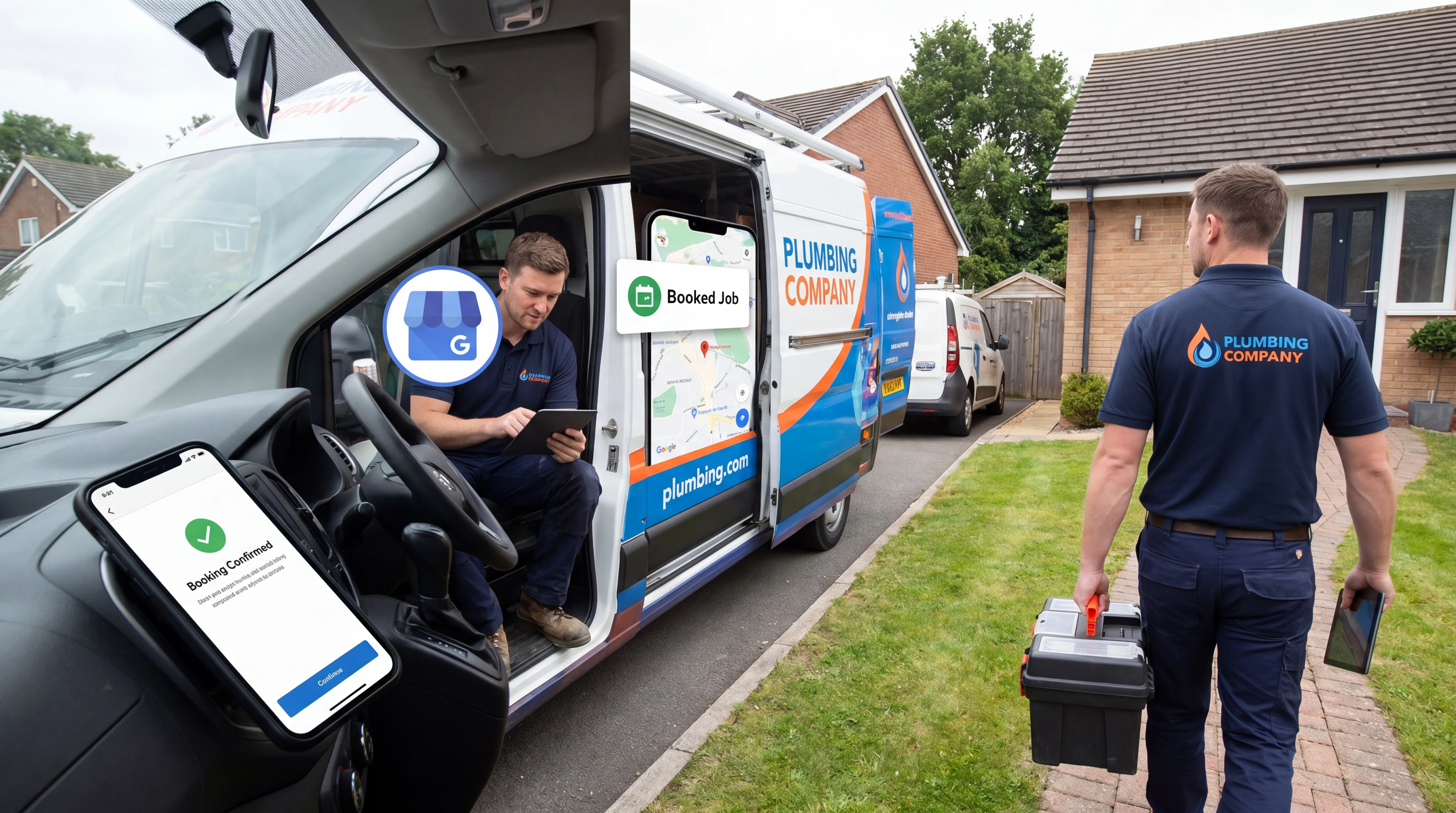
Workflow context for the article topic
Generated scene
Frequently Asked Questions
Sources