Why this matters
Build authority around missed calls, after-hours coverage, call overflow, and AI front desk workflows that turn calls into booked jobs.
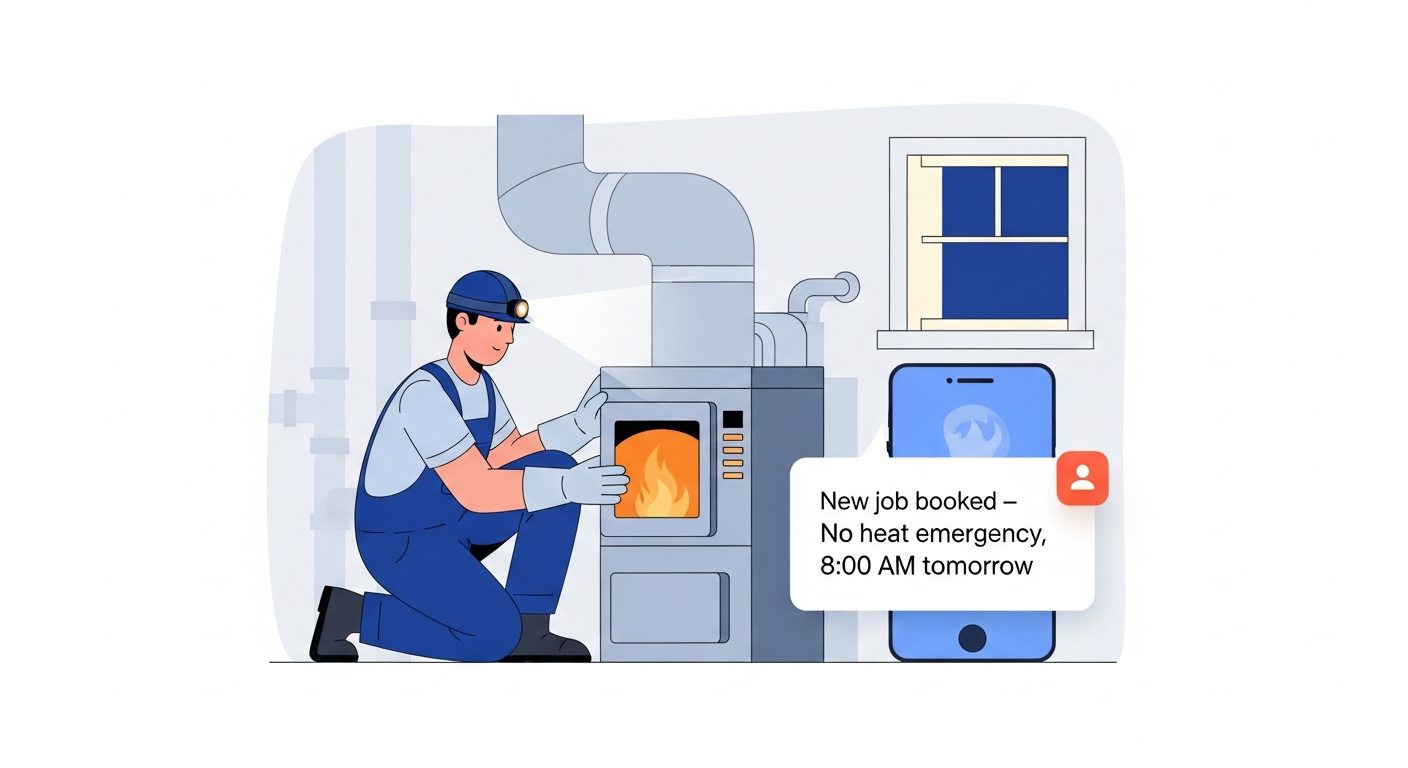
An answering service for an HVAC company should protect booked jobs, not just keep the phone from ringing out. The real test is what happens when a homeowner calls during a heat wave, a no-heat night, a weekend overflow window, or a packed dispatch board.
If the service only takes a message, your office still has to call back, re-ask the basics, check the schedule, and hope the customer has not already booked another contractor. A stronger workflow answers immediately, qualifies the call, separates urgent issues from routine work, and either books the appointment or escalates with enough context for a human to finish quickly.
TLDR:
- HVAC answering services should be judged by booked-job workflow, not call pickup alone.
- No-heat and no-cool calls need different triage than tune-ups, estimates, and warranty questions.
- The best setup combines instant answering, emergency rules, booking handoff, SMS confirmation, and owner visibility.
- Live answering can help with judgment-heavy calls, while AI answering is stronger for repeatable intake and seasonal overflow.
- MyBusinessFlow fits owner-led HVAC teams that want answering, booking, follow-up, and local visibility connected in one front-desk workflow.
Short answer: what to look for
The best answering service for an HVAC company is the one that can answer quickly, understand HVAC urgency, and create a usable next step. That next step should be a booked appointment, an urgent escalation, or a clean dispatcher handoff.
Use this rule of thumb:
| If your main problem is… | Prioritize this workflow |
|---|---|
| Missed calls during office hours | Overflow answering with immediate SMS follow-up |
| No-heat or no-cool calls after hours | Emergency triage plus on-call escalation rules |
| Seasonal spikes | Simultaneous-call handling and consistent intake |
| Weak booking conversion | Calendar or FSM handoff, not message taking |
| Too many callbacks | Structured summaries, transcripts, and owner visibility |
If the provider cannot show how a call becomes a booked job or a qualified escalation, it is only solving the first half of the problem.
What an HVAC answering service should handle
HVAC calls are not all the same. A homeowner saying “my AC is out” may need urgent service, but the right next step depends on service area, business hours, membership status, equipment context, occupancy, and technician availability. A maintenance plan question needs a different path. A replacement estimate needs a different path again.
A useful answering service should collect:
- caller name and callback number
- service address and whether it is inside your service area
- issue type, such as no cooling, no heat, tune-up, replacement estimate, or callback
- urgency and safety context
- preferred appointment window
- customer status, including new, returning, membership, warranty, or commercial account
- notes your dispatcher or technician needs before the visit
That intake has to be consistent. If one operator asks about equipment age and another skips it, your office gets uneven handoffs. If one call is booked and another becomes a vague message, your conversion rate depends on who happened to answer.
The HVAC-specific triage rules that matter
Generic answering scripts are weak for HVAC because the trade has seasonal and safety-sensitive patterns. Your coverage should know the difference between a routine maintenance request and a situation that needs priority handling.
For cooling season, the workflow should identify no-cool calls, vulnerable occupants, repeated system failures, water around equipment, and customers who already have an active appointment. For heating season, it should recognize no-heat calls, furnace outage language, possible combustion concerns, and when the caller should speak to the on-call path.
The system should not pretend every urgent phrase means the same thing. It should gather enough context to route the next step without creating dispatch chaos.
Live answering service vs AI answering service
Live answering services are useful when callers often need empathy, complaint handling, or judgment that falls outside a script. If your team receives many unusual commercial calls or delicate customer-service situations, human support may still belong in the process.
The limitation is consistency. Many live services are built around message taking. They can capture a name, phone number, and issue, but they may not qualify the call deeply, book into your schedule, send SMS follow-up, or update your operating system.
AI answering is strongest when the workflow is repeatable. It can answer every call instantly, ask the same HVAC-specific questions, text the customer when needed, recover missed calls, and route exceptions to the owner or dispatcher with a transcript and summary.
The strongest operating model is often AI-first with human escalation. Use AI for routine intake, overflow, after-hours calls, and missed-call text-back. Use people for calls that need judgment.
Cost is less important than cost per booked job
HVAC owners often compare answering services by monthly price or cost per call. That is understandable, but it can hide the real economics.
A cheaper service that takes messages may create more callbacks for the office. A more expensive service that books qualified calls may protect more revenue during peak demand. The useful comparison is:
- How many calls were answered?
- How many were qualified correctly?
- How many became booked jobs?
- How many urgent calls reached the right on-call path?
- How much manual cleanup did the office still have to do?
If the provider cannot report those outcomes, the price may look good while the workflow still leaks revenue.
The booking handoff is where most services fail
An answering service is only as valuable as the next step it creates. “Someone will call you back” is better than voicemail, but it is not a booked job.
Before choosing a provider, ask:
- Can the service book confirmed appointments or only send messages?
- Can it respect service areas, business hours, technician capacity, and emergency windows?
- Can it create a usable record in ServiceTitan, Housecall Pro, Jobber, Google Calendar, or your current workflow?
- Can it send SMS confirmation and keep the conversation connected?
- Can owners see which calls became bookings, escalations, or missed opportunities?
If the answer is unclear, test the handoff before forwarding real calls. A polished demo call means little if your team still has to clean up every record manually.
What to test before routing HVAC calls
Run a structured call test set before launch. Include:
| Scenario | What the service should prove |
|---|---|
| No cooling after hours | Captures urgency, address, callback number, and correct escalation path |
| Routine tune-up | Books or prepares a clean non-urgent appointment handoff |
| Replacement estimate | Separates sales opportunity from repair dispatch |
| Existing customer callback | Identifies customer status and avoids duplicate intake |
| Unsupported service area | Politely closes or routes without wasting office time |
| Seasonal overflow | Handles simultaneous calls without dropping details |
| Angry customer | Escalates to a human with context |
Use real business rules, not generic role play. If your on-call path changes by day, technician, ZIP code, or job type, test those rules too.
When MyBusinessFlow is a fit
MyBusinessFlow is built for HVAC teams that want the front desk workflow connected end to end: answering, qualification, booking, SMS follow-up, owner visibility, reviews, and local presence.
That matters because many HVAC companies do not only need someone to answer existing calls. They need a system that helps more local demand turn into booked jobs. The phone workflow should connect to the website, Google Business Profile, reviews, and scheduling path instead of sitting as a separate vendor.
Start with the broader best HVAC answering service comparison if you want vendor options. Use the AI receptionist vs answering service guide for HVAC if you are deciding between human coverage and AI-first coverage.
The practical decision
Choose an HVAC answering service that can prove four things:
- It answers every important call quickly.
- It understands HVAC urgency and seasonal language.
- It creates a booking or a clean escalation, not a vague message.
- It gives the owner enough visibility to improve the workflow over time.
If a provider cannot pass those tests, it may still answer calls, but it will not fully protect booked-job revenue.