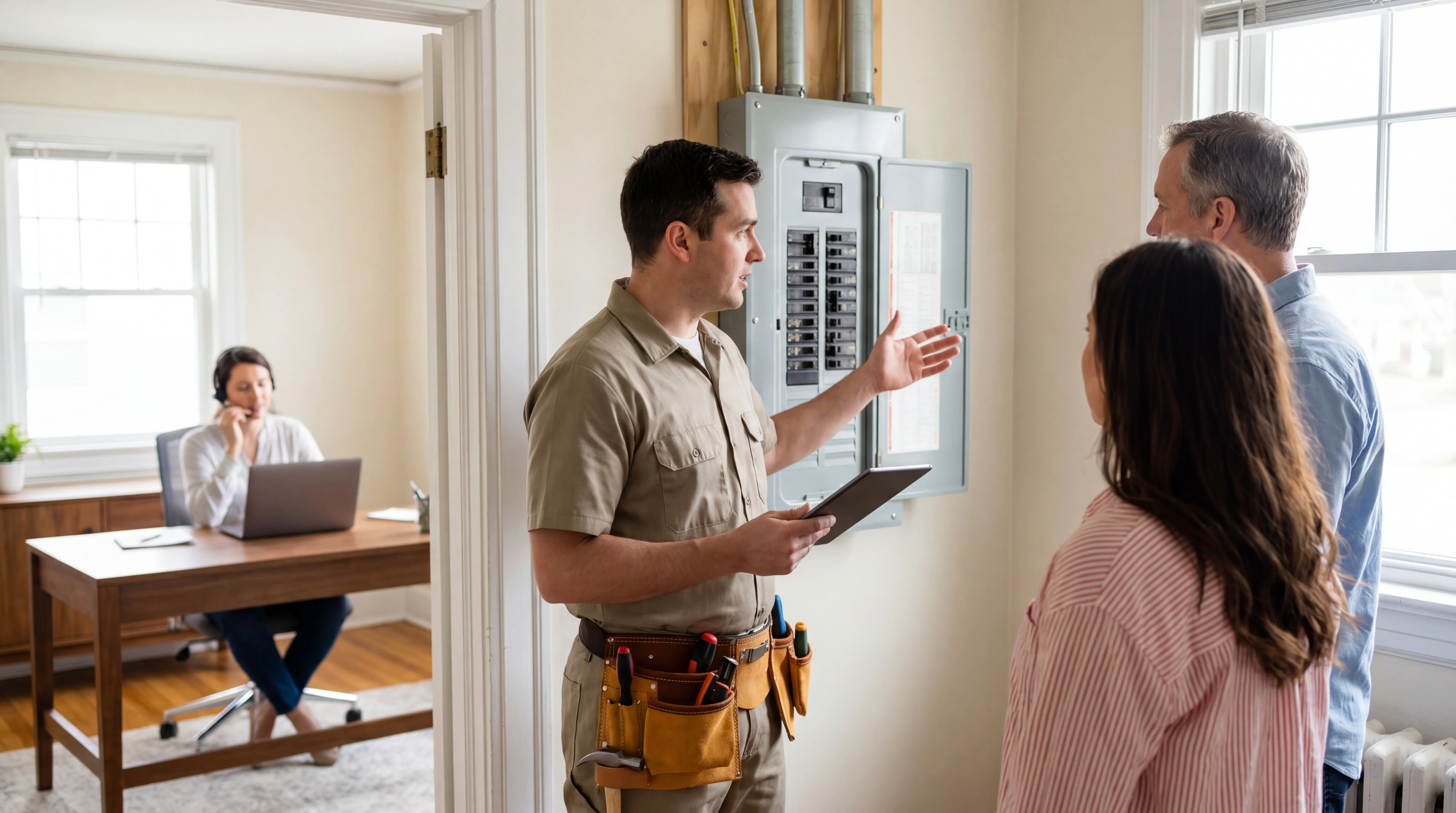
Why this matters
Build authority around missed calls, after-hours coverage, call overflow, and AI front desk workflows that turn calls into booked jobs.
Short Answer
For electrical contractors, the priority is not a generic AI phone bot. It is an overflow workflow that reliably answers calls during field work and busy office windows, captures the service request, screens for safety-sensitive situations, escalates urgent issues to a human, and moves routine calls into a real booking handoff with SMS confirmation.
That is the commercially sensible direction because missed electrical calls are often time-sensitive, and voicemail rarely creates the same recovery rate as a live, structured response. If you are also comparing “AI call overflow for home service businesses,” the buying decision is essentially the same: choose the workflow that improves response speed, qualification quality, scheduling coverage, and fit with your CRM or field service system. For broader context, see the AI Call Answering Hub.
Current guidance here is based on vendor-published materials from a limited evidence set, so treat named products as examples to verify in demos rather than a definitive ranked list.
Who This Is For
This guide is for electrical contractors who miss calls when:
- crews are on job sites
- dispatch is juggling urgent work
- the office is busy and calls roll over
- after-hours callers need a next step instead of voicemail
It is especially relevant for teams trying to turn more inbound calls into booked jobs without asking office staff to manually reconstruct every handoff. If that matches your operation, the broader Electrical overview may also help frame the problem in trade-specific terms.
Why Electrical Call Overflow Needs a Different Standard
Missed calls usually happen in predictable windows
Most electrical shops do not lose calls because nobody cares about the phone. They lose calls because the same people handling dispatch, scheduling, and customer questions are already occupied.
The two common failure points are:
- During field work, when crews are unavailable and office staff are thin.
- During busy office windows, when multiple callers stack up at once.
In both cases, the caller still expects a fast answer. If the call goes to voicemail, many will move on to another contractor.
Electrical urgency requires safety-aware escalation
Electrical intake cannot be treated like a generic message-taking workflow. Some calls may involve burning smells, sparking panels, partial outages affecting essential equipment, or other situations that need rapid human review.
That does not mean AI should diagnose an electrical hazard. It means the overflow system should follow clear rules to identify urgent signals and escalate them to a human according to your policy, instead of leaving the caller in a slow callback queue. This is also why many contractors evaluate overflow and After-Hours Answering together rather than as separate problems.
The real KPI is booked jobs
Answered calls matter, but the deeper business question is whether overflow coverage produces:
- faster first response
- better qualification
- fewer dropped opportunities
- more completed bookings
- less manual cleanup for staff
If a system answers the phone but creates messy notes, weak triage, or broken scheduler handoffs, it may increase admin load without improving revenue.
The Workflow to Prioritize
1) Capture every service request during overflow
A strong electrical overflow workflow should answer when the office cannot, gather the basics, and preserve context cleanly for staff review.
At minimum, that means collecting:
- caller name
- callback number
- service address
- problem summary
- timing needs
- whether the caller is an existing or new customer
This is the baseline for both daytime overflow and after-hours coverage.
2) Screen for urgent electrical issues and escalate to a human
The next priority is routing, not diagnosis.
For electrical teams, the system should be able to recognize when a caller’s situation may require urgent attention and trigger the right handoff, such as:
- transferring to an on-call person
- sending an immediate alert to dispatch
- marking the lead as urgent for rapid callback
The key buyer check is whether escalation rules are configurable enough for your shop. A residential service company, a commercial electrical contractor, and a mixed-service operator may all define “urgent” differently.
3) Book the right next step for non-urgent calls
Routine service requests should move toward a real appointment outcome, not just a note in an inbox.
For many electrical contractors, that means the overflow workflow should support one of these paths:
- book directly into an approved appointment type
- create a qualified callback task for office confirmation
- pass complete intake details into dispatch so the right next step can be scheduled quickly
The right model depends on how much scheduling authority you want the system to have. Some shops are comfortable with direct booking for common service calls. Others want a controlled handoff for panel work, troubleshooting, estimates, or larger jobs.
4) Confirm the handoff by SMS
SMS confirmation is useful because it closes the loop for the caller and reduces uncertainty after the call ends.
Whether the workflow books directly or hands off to staff, buyers should look for a process that can send confirmation details such as:
- receipt of the request
- expected callback timing
- appointment details, when booked
- the correct business contact information
This is especially valuable when the office is busy and callers need reassurance that the request was captured correctly.
5) Push cleanly into your system of record
The handoff layer is where many overflow projects succeed or fail.
For electrical teams, the system should fit the tools already used to run work, such as:
- CRM
- FSM software
- dispatch boards
- calendars
- internal alerting workflows
If notes, recordings, or booking details do not land in the right place, office staff end up re-entering information and fixing preventable errors.
What to Verify Before You Buy
Coverage during field work and busy office windows
Ask whether the product is designed for:
- simultaneous call spikes
- rollover from front-desk staff
- after-hours coverage
- overflow when dispatch is occupied
This sounds basic, but the practical question is whether the workflow remains usable when your office is under real pressure.
Safety-aware escalation rules
Ask vendors to show:
- which phrases or issue types can trigger escalation
- whether escalation rules are customizable
- how urgent calls are routed
- what happens if no one answers the escalation target
For electrical buyers, this matters more than a long list of generic AI features.
Scheduling, CRM, and FSM fit
The buying risk is not only whether a vendor mentions integrations, but whether the integration supports your actual workflow.
Verify:
- what system receives the call record
- whether appointments can be created or only requested
- whether staff can review transcripts or summaries
- how exceptions are handled when a call does not fit a standard booking path
If your team already depends on a field service platform, this check should carry more weight than cosmetic AI features.
Booking QA and exception handling
Not every call should auto-book.
You need to know:
- which appointment types are safe to automate
- when the system should defer to a dispatcher
- how reschedules, incomplete information, and edge cases are flagged
- how staff review questionable calls
Electrical work often includes enough variation that “book everything automatically” is not a safe default.
Pricing and implementation scope
Some products publish pricing; others require sales contact. In either case, verify:
- base platform cost
- usage-based fees
- setup and onboarding scope
- integration cost
- multi-location or multi-line requirements
Unknown implementation detail can matter more than sticker price.
Vendor Examples From the Current Evidence Set
Sameday
Sameday describes itself as an AI receptionist and scheduling product for home service businesses. Its public materials mention integrations including ServiceTitan and Housecall Pro, which may matter if your electrical business already runs on those systems.
It may be worth evaluating if your priority is home-service workflow fit and tighter scheduling alignment. Before making it a serious shortlist option, verify how well it handles electrical-specific escalation rules, what setup is required, and whether pricing fits your call volume.
Source: https://www.gosameday.com/
Avoca
Avoca positions itself as an AI contact center platform for high-volume service businesses. Public materials mention CRM integration, which suggests it may fit teams with heavier inbound volume and more structured routing requirements.
It may fit buyers who care most about scalable call handling and operational routing. The main buyer checks are whether the workflow can support electrical urgency rules, how booking handoff works in practice, and what implementation complexity looks like.
Source: https://www.avoca.ai/
Goodcall
Goodcall describes itself as a configurable AI phone platform and publishes pricing publicly. Its materials reference API and CRM connectivity, which may appeal to buyers who want flexibility and clearer initial cost visibility.
It may fit electrical teams that want configurable call handling without starting from a trade-specific package. The key checks are whether configuration effort is realistic for your team, how well it supports booking handoff, and whether urgent escalation can be controlled safely.
Source: https://goodcall.com/
Smith.ai
Smith.ai describes itself as an AI receptionist provider with human-backed answering options. Public materials mention CRM, calendar, and Zapier integrations, along with public pricing.
It may fit buyers who want a blend of AI workflow and receptionist-style coverage, especially if human fallback is important to the operation. Before moving forward, confirm how the service handles electrical urgency escalation, how booking permissions are managed, and whether the workflow creates clean dispatch-ready handoffs.
Source: https://smith.ai/ai-receptionist
How to Make the Buying Decision
Choose workflow fit over feature volume
For electrical contractors, the best choice is usually the one that can prove five things in a demo:
- it answers overflow reliably
- it captures service requests cleanly
- it escalates urgent electrical situations to a human
- it supports a usable booking handoff
- it confirms the next step by SMS without creating admin cleanup
That is a stronger decision framework than comparing generic claims about AI quality.
Match the product to your operating model
Different buyers may reasonably land in different places:
- If you want home-service scheduling alignment, a product like Sameday may be worth deeper review.
- If you need higher-volume contact-center style routing, Avoca may be the more relevant example to test.
- If you want a configurable phone workflow with public pricing, Goodcall may be easier to scope early.
- If you want AI answering with human-backed coverage options, Smith.ai may be worth evaluating.
None of those should be treated as a default recommendation for every electrical contractor based on the current evidence alone. The right fit depends on your call volume, escalation policy, scheduling process, and system stack.
A practical recommendation for most electrical buyers
If your core problem is missed calls during field work and busy office windows, start with a narrow pilot:
- route overflow calls into a safety-aware intake flow
- define clear escalation rules for urgent electrical issues
- allow routine calls to move into approved booking or callback paths
- send SMS confirmation so callers know the request was received
- review outcomes weekly for booking rate, response quality, and cleanup burden
That pilot will tell you more than a long feature checklist.
If you are actively evaluating options now, you can compare your requirements against an AI front desk setup and use the broader AI Call Answering Hub to benchmark related workflows.
Sources
Supporting visuals
Visual proof and context
Screenshots and images that support this article, with sources noted.
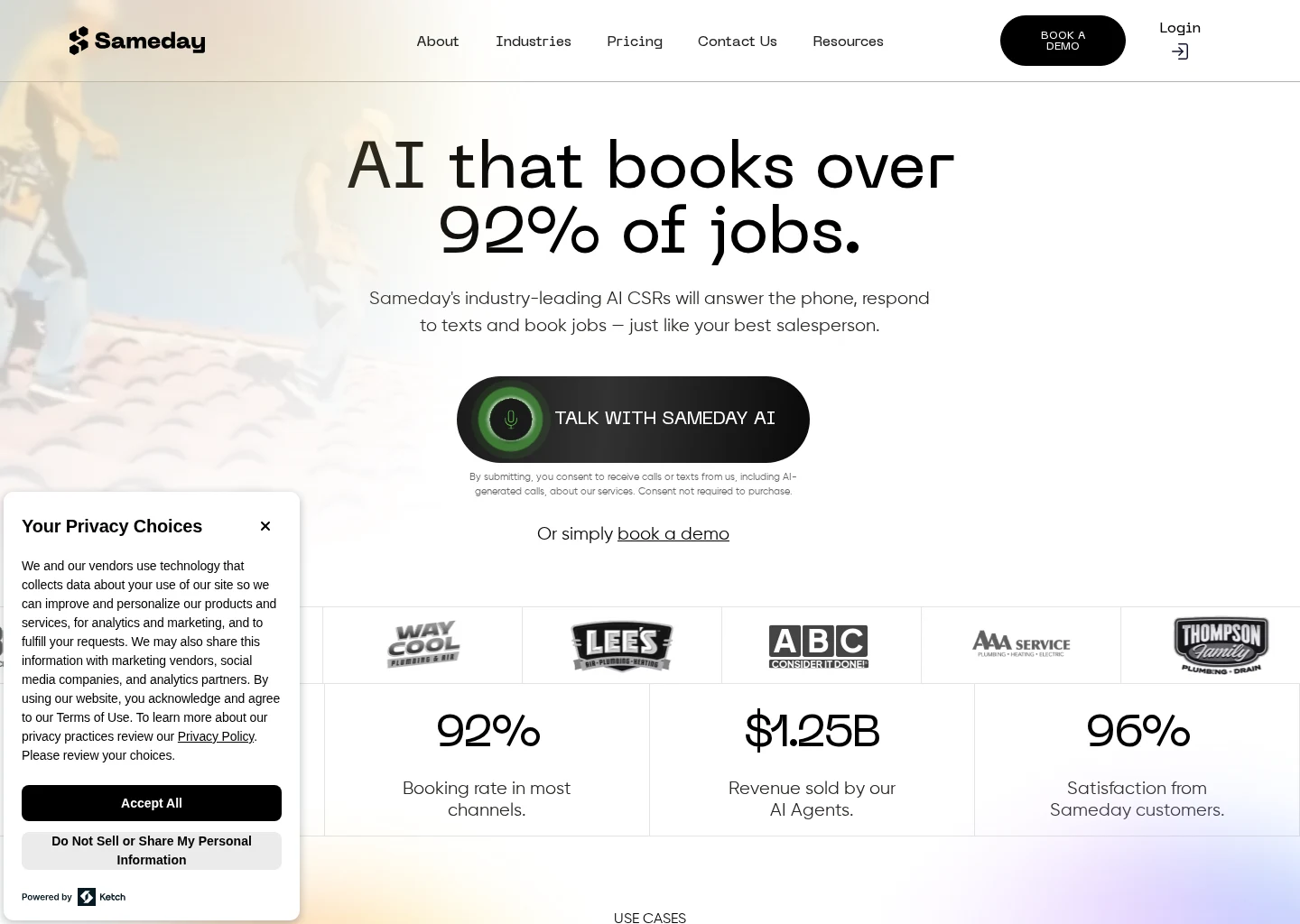
Source-backed evidence from www.gosameday.com
Captured evidence
SourceFrequently Asked Questions
Sources